
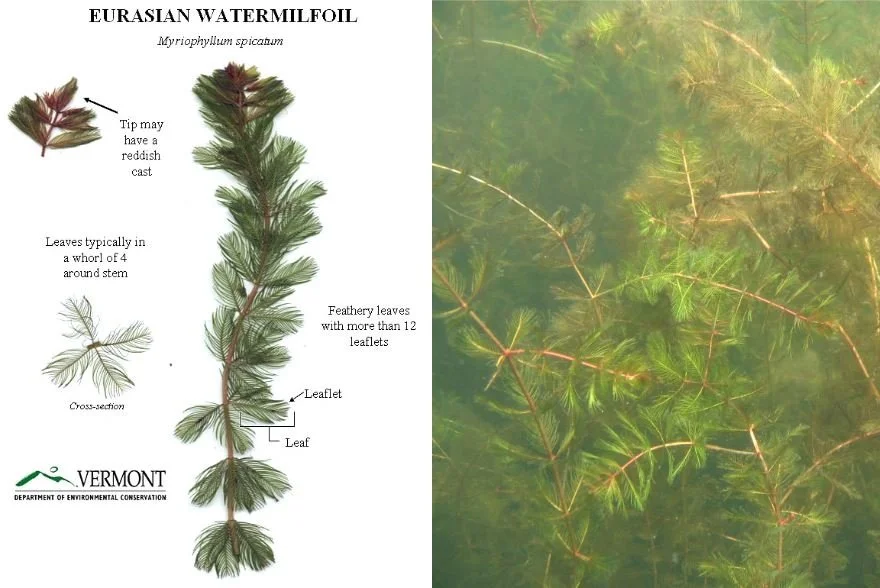
A practical decision guide for waterfront homeowners on Lake Washington and Lake Sammamish weighing the three primary milfoil control methods.
If you have already decided that the weeds in front of your dock need professional attention, the next question becomes: which method? Benthic barrier installation, manual removal by certified scuba divers, and selective herbicide treatment are the three primary control methods used in Washington State waters, and the right choice depends on factors specific to your property — not on which method is most popular or which has the lowest sticker price.
This article is structured to help you make that decision. It covers the questions you should be asking, the factors that point toward each method, and the situations where combining methods produces better results than picking just one. By the end, you should have a clear sense of which method (or methods) fit your property — or be in a strong position to evaluate proposals from a contractor.
If you are still trying to understand the basics of what milfoil is and why it spreads, start with our companion article: How to Get Rid of Weeds in My Lake. This article assumes you already know the species and the science, and focuses purely on the decision-making process.
The five questions that drive the decision
Before any method-specific details, the right approach is to answer five questions about your property. The answers point clearly toward one method or another in most cases.
1. How large is the affected area?
Square footage is the single biggest driver of method selection. Smaller areas tend to favor benthic barriers and manual removal. Larger areas tend to favor herbicide treatment because the per-square-foot economics shift dramatically at scale. Mid-range areas are where the decision becomes most situational.
A practical way to estimate: walk the shoreline at the front of your property and measure the length of the area you want clear, then estimate how far out into the water the dense weed growth extends. Length multiplied by width gives you approximate square footage. A typical residential dock zone might run 50 feet of shoreline by 30 feet out, equaling roughly 1,500 square feet.
2. How long do you want it to stay clear?
Are you trying to clear the area for one good summer, an entire growing season, or multiple years? The methods differ dramatically on this dimension.
Manual removal typically gives you several weeks of clear water before regrowth becomes visible. Herbicide treatment generally lasts a full growing season, sometimes longer. Benthic barriers provide multi-season suppression, often holding back regrowth for multiple years when properly installed and maintained.
If you are hosting one big event in late August and want clear water for it, manual removal is the obvious choice. If you want clear water for a full summer of weekend use, herbicide treatment makes sense. If you are tired of dealing with the same problem every year and want a set-it-and-forget-it solution, benthic barriers are the right call.
3. What is your tolerance for chemical treatment?
This is partly practical and partly philosophical. The herbicides currently used for milfoil control in Washington State, particularly ProcellaCOR EC, have favorable safety profiles. There are no swimming or fishing restrictions on the day of application, no bioaccumulation in fish, and they are EPA-approved for aquatic use. The Department of Ecology permits all aquatic herbicide applications and requires public notification.
That said, some homeowners and HOA boards prefer chemical-free management regardless of safety data. If that is your preference, benthic barriers and manual removal are your two options. The trade-off is usually higher cost — chemical-free methods are physically more labor-intensive.
4. What is the location within the property?
Where the weeds are matters as much as how much there is of them.
Dock zones and boat slips are high-priority areas where multi-season suppression is usually worth the higher cost. Benthic barriers excel here. Swim areas follow the same logic — you want guaranteed clear water for kids and adults, ideally for years. Open shoreline depends on how often you use it; for purely aesthetic clearing, herbicide is usually the most cost-effective option. And for wide shoreline frontage of 200 feet or more, herbicide is almost always the right choice. Benthic barriers at that scale would be impractical.
5. What is your budget?
Cost is rarely the only factor, but it is always a factor. The key insight: the cheapest method per square foot is not always the cheapest method overall once you factor in how often you have to repeat the treatment.
A small dock zone treated with manual removal, repeated every several weeks across a five-month season, can cost roughly the same in total as one benthic barrier installation that lasts multiple years. Looking at one-time cost versus total cost over five seasons can change the decision substantially.
When benthic barriers are the right choice
Benthic barriers are the right choice when you have a defined high-use area — a dock, swim zone, or boat slip — and you are tired of dealing with the same problem every year. They are also the strongest option for homeowners who prefer chemical-free management, who want a one-time investment rather than ongoing maintenance, and who care about long-term property planning and resale value.
The economics work in favor of benthic barriers when the property is going to remain in the family for at least three years. Spread across multiple seasons of clear water, the per-season value of barriers is often better than annual herbicide treatments, even though the upfront sticker price is higher.
When manual removal is the right choice
Manual removal is the right choice for small infestations, especially when you need clear water for a specific event in the next several weeks. It is also a good fit for homeowners who want a chemical-free option but cannot justify the upfront cost of barriers, for sellers who need a quick visual improvement before a property showing, and for ongoing maintenance touch-ups around a previously-installed benthic barrier.
The biggest limitation is duration. Manual removal does not last. If you need clear water through August and into September, plan for at least one repeat treatment, possibly two. The cumulative cost can add up, which is why this method tends to fit best for short-term needs.
When herbicide treatment is the right choice
Herbicide treatment is the right choice when your affected area is larger and you want season-long control without the higher upfront cost of barriers. It is also the dominant approach for HOAs and shared shoreline communities coordinating treatment across multiple properties, for properties with wide shoreline frontage of more than 100 linear feet of weed coverage, and for homeowners who are comfortable with permitted, regulated aquatic herbicide application.
The Department of Ecology permit fee makes herbicide uneconomical for very small jobs. Above a certain threshold, the per-square-foot economics start to favor herbicide significantly.
If you are unsure which method fits your property best, the simplest path forward is to schedule a free onsite assessment. We provide fixed-price quotes covering all three methods side-by-side, so you can see real numbers for your specific property before deciding.
How to think about costs across methods
Per-square-foot cost is the least useful number for comparing methods because the methods have wildly different durations. The number that actually matters is cost per season of clear water, or better yet, total cost over a five-year period. A method that is more expensive per square foot but lasts much longer is often dramatically cheaper in the long run.
Benthic barriers
Benthic barriers carry the highest upfront cost per square foot of the three methods, and there is typically a project minimum below which the work is uneconomical. The trade-off is duration: a single installation often holds back regrowth for multiple seasons. Spread that across the years, and the cost per season of clear water can be very competitive — sometimes the lowest of the three methods over a five-year horizon.
Manual removal
Manual removal has a moderate cost per square foot and a project minimum to cover the cost of mobilizing a dive crew. Because regrowth begins within several weeks, holding clear water for a full summer typically requires multiple rounds of treatment in the same season. A single visit is often less expensive than the alternatives. Three or four visits in one season usually adds up to more than one herbicide treatment or one benthic barrier installation.
Herbicide treatment
Herbicide treatment has the lowest cost per square foot of the three methods, but the Department of Ecology permit fee is a fixed cost that gets added to every herbicide project. For very small areas, the permit fee dominates the math and makes herbicide uneconomical compared to manual removal. Above a certain area threshold, the per-square-foot economics start to favor herbicide significantly. At very large scale — whole HOAs or wide shoreline frontages — herbicide is almost always the most cost-effective option by a wide margin.
Putting it together
For most properties, the right way to think about cost is not what each method costs per square foot today, but what the total cost of keeping the area clear will be over the next five years. The cheapest year-one option is sometimes the most expensive over time. A method that requires no repeat treatment for several years can save thousands compared to a cheaper method that has to be redone every season.
This is one of the reasons we always quote all three methods side-by-side during a free onsite assessment. Seeing the actual numbers for your specific property — and projecting them forward across five years — usually makes the right choice obvious.
Why combining methods often beats picking just one
Most aquatic plant management researchers — including those at the Washington State Department of Ecology and the Minnesota Aquatic Invasive Species Research Center — explicitly recommend integrated approaches over single-method dependence. The reason is straightforward: each method has gaps that another method covers.
Strategy 1: Barriers in priority zones, herbicide everywhere else
This is the most common integrated approach for properties with both a defined high-use area like a dock or swim zone, and broader shoreline weed coverage. Install benthic barriers under and around the dock for permanent suppression. Apply herbicide treatment to the surrounding area for season-long control. Hand-pull any regrowth at the edges of the barrier in mid-summer.
This combination delivers permanent dock-zone clearance plus full-season clearance of surrounding areas, often at a lower total cost than treating the entire property with a single method.
Strategy 2: Herbicide first, then barriers in cleared zones
This sequencing is best for heavily infested properties where the milfoil mat is so thick that benthic barrier installation is impractical without first reducing biomass. Apply herbicide in early summer to knock back the infestation. Install benthic barriers in the now-cleared priority zones in late summer or early fall. The following spring, the property starts the season with both an established control history and permanent suppression in high-use areas.
Strategy 3: Manual maintenance between major treatments
This works well for properties where benthic barriers have been installed but small regrowth occurs at the edges or in adjacent areas. Schedule a single manual removal touch-up in mid-summer to clear edge regrowth, rather than letting it spread. This keeps the visible appearance of the property clean throughout the season without the cost of treating the entire area again.
Strategy 4: HOA-coordinated whole-shoreline treatment
For homeowner associations, condominiums, or shared waterfront communities, a coordinated approach across multiple properties is dramatically more cost-effective than individual homeowners doing isolated treatments. A single Department of Ecology permit can cover treatment for an entire community shoreline. Per-property costs drop substantially as the affected area scales up. We work with HOAs and waterfront associations on coordinated treatments regularly, and the savings versus individual treatment plans are usually substantial.
Common decision-making mistakes
After working with hundreds of waterfront properties, a handful of decision-making mistakes show up over and over. They are worth flagging so you can avoid the same traps.
Mistake 1: Picking based on lowest per-square-foot cost
As covered above, per-square-foot cost is the least useful number for comparing methods because the methods have wildly different durations. The number that actually matters is cost per season of clear water, or total cost over a five-year period.
Mistake 2: Treating a problem that is too large for the chosen method
Benthic barriers do not work well at large scale. Homeowners sometimes try to install barriers across very large areas only to find the cost climbs beyond their budget and maintenance becomes a real burden. Conversely, some properties try to use herbicide treatment for tiny dock zones only to find that the permit fee makes the project uneconomical compared to manual removal.
Match the method to the scale. The method recommendations earlier in this article are calibrated to typical use cases for a reason.
Mistake 3: Treating only once and expecting permanence
Eurasian watermilfoil is essentially impossible to permanently eradicate from any open lake system because seeds and fragments are constantly being reintroduced from elsewhere in the lake. The Cascade Water Alliance, which manages Lake Tapps, treats the lake annually for this reason — and has spent millions on milfoil management over the years. Plan for ongoing management. For more on the science behind this, see our companion article on the basics of milfoil control.
Mistake 4: Hiring an unlicensed operator
Anyone applying aquatic herbicides in Washington State must hold a current commercial pesticide applicator license through the Washington State Department of Agriculture (WSDA) and operate under coverage from a Department of Ecology general permit. Operators who skip these credentials may quote significantly lower prices, but the homeowner inherits significant liability if anything goes wrong. Always ask for license numbers up front. Our credentials and licensure are listed publicly.
Mistake 5: Treating the wrong species
Not every aquatic plant in your lake is invasive. Some, like certain pondweeds and native milfoil species, are beneficial parts of the lake ecosystem. Treating them indiscriminately can damage water quality and waterfowl habitat. Any reputable contractor should perform species identification as part of the initial assessment, not just measure square footage and quote a price.
Questions to ask any contractor before you sign
Whether you are getting quotes from us or from a competitor, the same questions apply. Strong contractors will have clear answers to all of these. Be skeptical of any operator who hedges or refuses to answer.
On credentials
• What is your WSDA commercial pesticide applicator license number? This is required for any herbicide work.
• Which Washington Department of Ecology permit will my project be covered under?
• Are your scuba divers commercially certified for in-water work? Can you provide proof of insurance?
On the proposal itself
• Is this a fixed-price quote or an estimate? What happens if the actual scope exceeds the quote?
• Does the quoted price include labor, materials, and state permitting fees?
• What species are you treating, and how do you confirm the identification before treatment?
• If herbicide: which active ingredient, what dose, and what are the post-application restrictions?
• If benthic barrier: what fabric weight and material, what installation depth, what anchoring system?
On expectations and follow-up
• How long should I expect this treatment to last before regrowth becomes visible?
• Do you offer follow-up monitoring or maintenance? At what cost?
• What is your cancellation and rescheduling policy?
• Can I see references from comparable properties on Lake Washington or Lake Sammamish?
If a contractor cannot answer these questions clearly, that is the answer. Aquatic invasive species management is a regulated industry for a reason — the work involves chemicals, in-water labor, and ecological impact. Anyone doing it professionally should be able to articulate every aspect of their process.
How Manatee Aquatic approaches the decision with our customers
Our process for new properties follows the same logic as this article. When we visit a property for a free onsite assessment, the work goes in this order.
First, we identify the species present, including any native plants we should avoid affecting. Second, we measure the affected area precisely. Third, we discuss the homeowner's goals — duration, chemical preferences, budget, future plans for the property. Fourth, we provide a fixed-price quote for all three methods, side-by-side, so the comparison is concrete. Fifth, we recommend the method or combination we believe best fits the property, but the choice is always the homeowner's.
This approach takes longer than just quoting a single method, but it leads to better outcomes. Customers who choose with full information rarely come back disappointed; customers who feel rushed into a single method often end up regretting it. Schedule your own free assessment online or call us at (206) 353-0014 to talk through your specific property.
About Manatee Aquatic
Manatee Aquatic is a Seattle-based aquatic invasive species removal company specializing in Eurasian watermilfoil control on Lake Washington, Lake Sammamish, and surrounding King County lakes. We offer all three primary control methods: benthic barrier installation by certified scuba divers, manual removal, and herbicide treatment by WSDA-licensed commercial applicators under Washington Department of Ecology permits.
All proposals are fixed-price and include labor, materials, and any required state permitting. Free onsite assessments are available year-round. Call (206) 353-0014 or visit manateeaquatic.com to schedule.
Sources and further reading
• Washington State Department of Ecology — Aquatic Plant and Algae Management (APAM) general permit documentation
• Washington State Noxious Weed Control Board — Eurasian watermilfoil control guidance
• King County Noxious Weed Control Program — local identification and control resources
• Laitala, K.L., Prather, T.S., et al. (2012). Efficacy of benthic barriers as a control measure for Eurasian watermilfoil. Invasive Plant Science and Management, 5: 170-177
• Kujawa, E.R., Frater, P., et al. (2017). Lessons from a decade of lake management: effects of herbicides on Eurasian watermilfoil and native plant communities. Ecosphere, 8
• Minnesota Aquatic Invasive Species Research Center — Eurasian watermilfoil control options literature review
• Cascade Water Alliance — Lake Tapps milfoil management program documentation
Manatee Aquatic, LLC · Seattle, WA · (206) 353-0014 · manateeaquatic.com